My uncle Jim (my mom’s brother) got into wood turning years ago and for a long time I had no idea what he was doing–I could only picture table or chair legs when he’d tell me about wood turning during phone calls . If you would rather listen instead of read, play the audio (and there’s a few minutes of BONUS info on the audio this time too!):
Wood turning history
In discussing woodturning with my uncle Jim, I asked him if there was anything he’d like me to include in the article maybe about like the history of it, or just how enjoyable it is when you’re crafting from the wood like that?
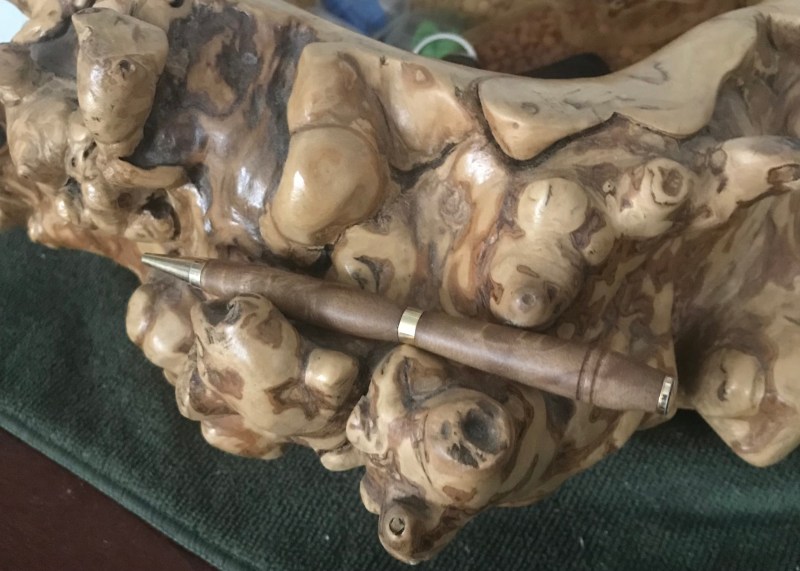
Here’s what I learned from my uncle (written mostly from his perspective):
The history of turning
When I think back the history of wood turning goes back a long, long way. Even before we had electricity and metal equipment, turning the lathe goes back to when the lathe was called a pole lathe. They would take a tree and bend it over something else to enable a sort of treadle, that would allow the wood to turn. Later, someone invented a foot treadle to power the turning machine. That was used all the way until they got electricity and motorized lathes came into being. That gives you some history of how the wood is turned. I find it is a very fulfilling thing to do and artistic in a way too.
There’s one magazine I have had, it kind of got expensive, so I’m not taking it now. It showed how people turned simple things to turning pins and bowls to more artistic things. And it’s become a very artistic and elaborate hobby for many people. Some people are professional woodturners and they make their living. For me, I’m just not interested in that kind of thing. It just goes way beyond my ability and it is just something I’m not interested in. Also, sometimes it takes months to accomplish one of these complex projects.
Different kinds of wood turning
Of course, learning all kinds of different ways of wood turning can lead you into creating something, and developing some items that you could market. Many wood turned items have become popular. There’s one kind of wood turning that is called Segmented woodturning, which I would love to be able to do. It’s where you make weight at that table saw. You saw up just small pieces and it takes some learning to be able to know the exact angles and you have to decide how big you want your piece to be. How many segments and such. You cut all these pieces, you make a ring and you glue all that together, and then you stack those and then of course you turn it until you have an outcome that is quite beautiful.
And then there’s one they call Dizzy. They take very, very small thin layers of wood and there shall I say kind of up and down. You kind of bend them to a certain degree and glue them in turn and you get these beautiful shapes and colors so it can be very pretty and very pleasing. So it’s very satisfying. Like, say it’s artistic and so it’s fulfilling for people.
How my uncle learned wood turning
I’ve always wanted to do wood turning since I was in high school and I couldn’t get into that. The teachers seemed to kind of want to keep me in academics (instead of wood shop) as if I was going to college even though I wasn’t interested in going to college. But that didn’t seem to matter. So anyway, I never was able to get into that until much later in life. Your aunt Janice’s sister Janet said, “There’s an article in the paper, about a little place called Woodcraft and they’re going to be having an exhibit.” And it wasn’t about turning, it was about carving. And that’s a whole other ballgame. People carve wood ducks and spend months and months on them because they use very little knives. And they’re, they’re so patient and they’re carving feathers to the point that you can’t tell this wooden duck from a real duck! It’s very time-consuming.
So anyway, I went and I happened to go see this thing and it was a it was probably three and a half feet long and a half two foot deep. And it was probably two and a half feet tall. It was a big display of an old western saloon. And it had all the tables and chairs turned and people were carved in it too. It had a whole grid like set up. I wasn’t interested in carving but it was interesting to look at. I saw a gentlemen there I knew. I told him I was interested in turning and he invited me over to his shop to see what he’d turned.
So that began my love for turning and specifically, turning pens. It was a wonderful blessing for me that Don (a gentleman that a church family friend had dated for several years) was willing to spend that time and introduce me to such an interesting and fulfilling craft. People make more elaborate and complicated turns, like Dizzy bowls where they take different pieces of wood, close together–glued up. They’ll skip every other one. And so it’s called an open segment. And that’s a different thing to look at.
Look at some artistic turning videos. It’s wild the designs that people come up with. I mean some will combine turning and carving together and they just come up with some very unique and different-looking creations. People even get some of their works into museums!
You can get into some very, very expensive turnings. One can spend thousands of dollars. But, it may take months to create each project. That gives you some ideas of how many types of turnings there are to look at (see the YouTube links in this article). Different and unique designs to expand your vision and a knowledge of turning. For me, it’s just something very satisfying. This form of arts and crafts is very relaxing.
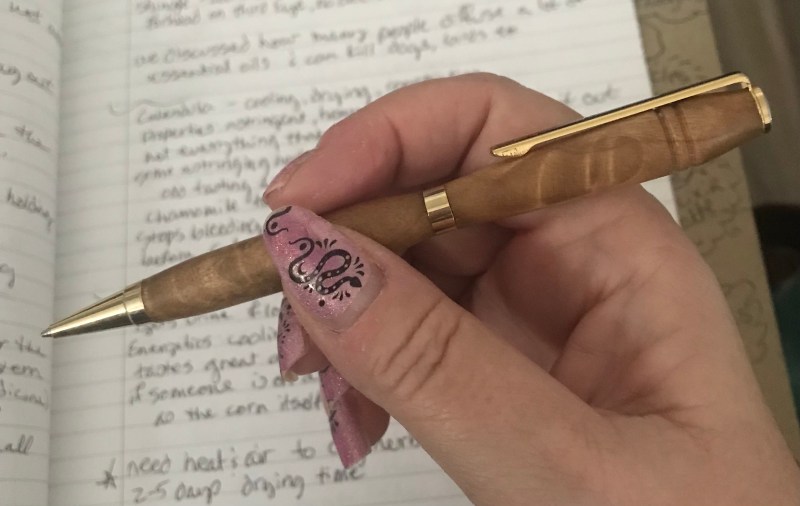
Wood turning safety
When you are working with a piece of equipment such as a lathe, safety is of the utmost importance. A motorized lathe is revving at fast speeds. My small lathe can turn at 3500 RPMs; others can turn up to 5000 RPMs. So you have to be careful and stay safe. Of course, we wear a mask or a shield that can filter all the air. Because wherever you turn, whenever you breathe, what goes in stays in so you can’t be without something that filters those particles out. And sanding is the worst. You’ve got to have a filtering system, whatever that may be, whether it’s just on your face or whether it’s a piece of equipment that continually filters the air. You have to be careful with that and always wear a shield because you’re turning off pieces of spin. In the beginning you’re gonna have some bark flying off and larger pieces. So you got to protect yourself that way. And of course, you have to remember that it’s happened before where we have had a few people die from performing wood turning.
Finishing wood turned pieces
When you complete a wood turned item you may feel negative with your finished piece. You may start with only 200, 300, 400, or 500 RPMs spins, because it’s out of balance. So once you get it in balance, then you can turn the lathe speed up and you can turn the piece quicker. And then when you’re sanding sometimes use either high or low speed, but some people forget and just turn their lathe off. Well, then they forget. Then they put a new piece of wood on the lathe and it gets out of balance and they turn that thing on and it’s running at full speed and the piece flys right off. Even at your best of anchoring this thing a piece can come flying off or it can just simply break apart. And that does happen. I like to work with one-piece/solid chunks of wood. But some people like to work on a piece of wood that has more holes in it. They say the more cracks in it the better because it gives the finished piece character. And it does look nice, but it’s just not one of my things. I delight in the natural beauty of the wood grain (the design within the wood) of the solid wood pieces.

Then there’s a whole world of skill and how you use your tools. What to do and what not to do. Because we can catch and therefore things can come apart if you have to get down to where you’re fairly thin. And you’ve got some of these holes and things that could catch (on the lathe) and things could come apart. People have been hurt by these kinds of things. That’s just some of what you can do.
There are times that you’re gonna be using a table saw again, some here wood pieces. Get it down to small pieces like it could be two or three feet long, maybe only three or four inches wide and that’s when you’re cutting all these small little pieces. So use tables. To do that. Of course, add some safety and sometimes you’ll be using the bandsaw to it again, a great big chunk of wood and it’s just got four corners. You want to make this thing round because that’s a lot less vibration, a lot less beat and bang for the lathe to get this thing around. So if you use a bandsaw you can cut those corners and make it a round piece of wood before you put it on the lathe, which is wonderful. This also offers an extra measure of safety while you’re using all these different kinds of tools.
The joy of wood turned pieces
But here again, it is just as enjoyable because you can do so many other things with what they got flat. And if you were making a table you got a great big piece of wood there for a slab for your tabletop, if that’s what you make it out of it. You can always branch out into what was called flat work which is building cabinets, coffee tables, side tables, and dining tables. All these kinds of things have gone by the way side though. I’m sorry to see less turned pieces when I see advertisements now on TV of wood items. Solid flat furniture is one I see a lot. And they’ll say they’ve got a certain price for all these tables and chairs. And you look at that. Just straight edges. There’s not one bit of terrain there. There’s nothing artistic about it. Right. Oh my goodness, that is so plain. That bothers me but I know it’s quick and fast and cheaper. So they can just simply cut it out. Put it together. Put a finish on each piece and out the door it goes. Oh no, that’s not for me.
How to turn a pen
Here’s a short video on the making of a slimline pen:
I hope everyone (who celebrates it) had a wonderful Thanksgiving holiday.
Yours in expanding, turning, revolving, spiraling consciousness,
To our better health, ease, and sustaining lives of JOY!
Sheila “Spiral Sister” Murrey
p.s. My 4th book is on Amazon and the link where you can check it out if you like: Have Yourself a Wholly Vibrant Life: Reversing Asthma and Other Chronic Illness Naturally
Transcribed by https://otter.ai – Audio provided by Otter; Edited with Grammarly.
The information provided is for educational purposes only and is not intended to treat, diagnose or prescribe.
About us
My husband is an award-winning illustrator, plus he’s a seasoned guitarist, bass player, and songwriter (with over 400 original songs). You can view some of his artwork and listen to all of his songs at: http://listen4music.com
Here’s a video of us performing on Vimeo: https://vimeo.com/416711742?ref=fb-share
About me, your Spiral Sister

I would love to speak at your bookstore, crystal shop, acupuncture/chiropractor office, natural health foods store, art fair, music, or yoga festival. I support healthy lifestyle businesses.
I invite you to check out my new metaphysical book–Blue Eyes: Ethereal Messages of Connection. There are two versions (Kindle and paperback) on Amazon: https://amzn.to/3WV68KF
I’m an Amazon bestselling author of two co-authored books: “Transform Your Life Book 2 Inspirational Stories and Expert Advice” and “Energy of Receiving” available on Amazon.
Connecting…
For more spiritual and esoteric updates, who we’re connecting with, new writing, memes, and hobbies, follow me on Instagram: https://www.instagram.com/takeonyour
 Integrating the Spirals
Glad you got to put this blog subject together. The enthusiastic narration from an avid fan of a wood turner on the art of woodturning is sublime. Love the progression of descriptive elements. And so important to include the safety aspects too. I helped make a pole lathe once. Only tried it out a little, but such a fascinating skill to master. They were going to house it in woodland for future community project use. And the beauty of found surrounding wood in this environment, that is unique in its inherent patterns, gives a splendour to each turned project. A wise choice avoiding wood with plain uniformity. I do love spalted wood (fungi intrusion influences) and visual knots on the outside the turned surface too. Spalting zone lines provide a beautiful story that tells of the trees years of growth with other aspects of nature. And, I was given a turned pen as a retirement gift. So can see close up the intricacy of the skill required. The metal ‘furniture’ additions (clip, band, etc.) can add aesthetic glory to a pen too. And they have to snuggle fit. So the wooden pen barrel has to be spot on ‘size wise’. Enjoyable read Sheila. Thank you.
LikeLiked by 1 person
Gray, thank you so much for encouraging me (prompting me to get this out). I had an earlier draft but didn’t include from it the stuff about the age of the wood via tree rings or how involved it can be to make the turned wood fit the
metal ‘furniture’ clip, band, etc. I appreciate you bringing forth the additional info and clarity! As always, brilliant! Cheers!
LikeLiked by 1 person
It is a really well written piece. Clear and informative. Loved it. All the best.
LikeLiked by 1 person